
What Nobody Tells You About 2026 Ballon d'Or
Harry Kane is the strongest Ballon d'Or predictions 2026 pick after a reported 56-goal, eight-assist campaign for Bayern Munich, England and the 2026 World Cup. The award, scheduled for October 26, 2026, evaluates performances from August 2025 through July 2026, with 100 international journalists ranking players from first to tenth. Kylian Mbappé, Lamine Yamal, Michael Olise, Erling Haaland and Ousmane Dembélé remain serious contenders because individual output, team trophies and decisive performances all matter. The 2026 FIFA World Cup is the major probability multiplier: a winning captain or tournament-defining attacker can overtake a club-season leader within weeks. The official Ballon d'Or framework also considers sporting conduct and fair play, not merely goals. Treat every early ranking as a live probability model, not a final verdict. For the sharpest forecast, track World Cup knockout performances, Champions League trophies and verified statistics before choosing your preferred candidate.

Photo by Red Nguyen on Pexels
Before 2025: how Ballon d'Or predictions worked
Before the 2025-26 cycle, Ballon d'Or predictions usually followed a familiar formula: identify the best player at the strongest club, then adjust for goals, trophies and international tournaments. That model worked often enough to fool casual observers into believing the award was purely statistical. It is not. The voting system rewards narrative, decisive moments and perceived influence, which means a brilliant final can matter more than five quiet league matches.
The recent winners prove the point. Lionel Messi won his eighth Ballon d'Or in 2023 after Argentina's World Cup success. Rodri claimed the 2024 award after his influence for Manchester City and Spain. Ousmane Dembélé won in 2025 after Paris Saint-Germain's major campaign. According to the Ballon d'Or official website, voters assess individual performance, collective achievements and a player's class on and off the pitch.
That creates a simple expected-value calculation:
- Elite club production: roughly 35% of the forecast.
- Major trophies: roughly 30%.
- World Cup or international impact: roughly 25% in a tournament year.
- Reputation and fair play: roughly 10%.
These percentages are a forecasting framework, not official voting weights. The hard truth is less romantic: the player with the strongest story often beats the player with the strongest spreadsheet. Yes, football remains capable of making a spreadsheet cry.
[Internal Link: how Ballon d'Or voting works]
Read the historical framework before trusting a headline ranking.
What was the 2026 shift?
The 2026 shift is the FIFA World Cup effect. The tournament is hosted by Canada, Mexico and the United States, with Los Angeles staging eight matches and 39 days of fan events. That creates an unusually large global stage immediately before the award decision. A player who delivers in a semi-final or final can gain more voting momentum than a domestic league leader who finishes the season quietly.
The 2026 shortlist reportedly contains 30 men's nominees, including previous winners Lionel Messi, Rodri and Ousmane Dembélé. The voting window runs from September 1 to September 10, according to reporting around the 2026 selection process, while the ceremony is expected on October 26. Timing matters. Voters are not evaluating a blank statistical database; they are remembering the latest defining images.
A useful probability model looks like this:
- Start with a player's club-season output.
- Add a trophy multiplier for the UEFA Champions League or major domestic title.
- Add an international multiplier for World Cup knockout impact.
- Subtract availability, disciplinary and consistency risks.
- Recalculate after every decisive match.
The contrarian insight is clear: a World Cup group-stage hat-trick has less expected award value than one goal in a semi-final. The opponent, match state and round change the coefficient. Data shows that voters respond to leverage, not just volume.
According to FIFA's official World Cup information, the 2026 tournament's scale will expose candidates to exceptional scrutiny. That makes the World Cup both an opportunity and a trap.
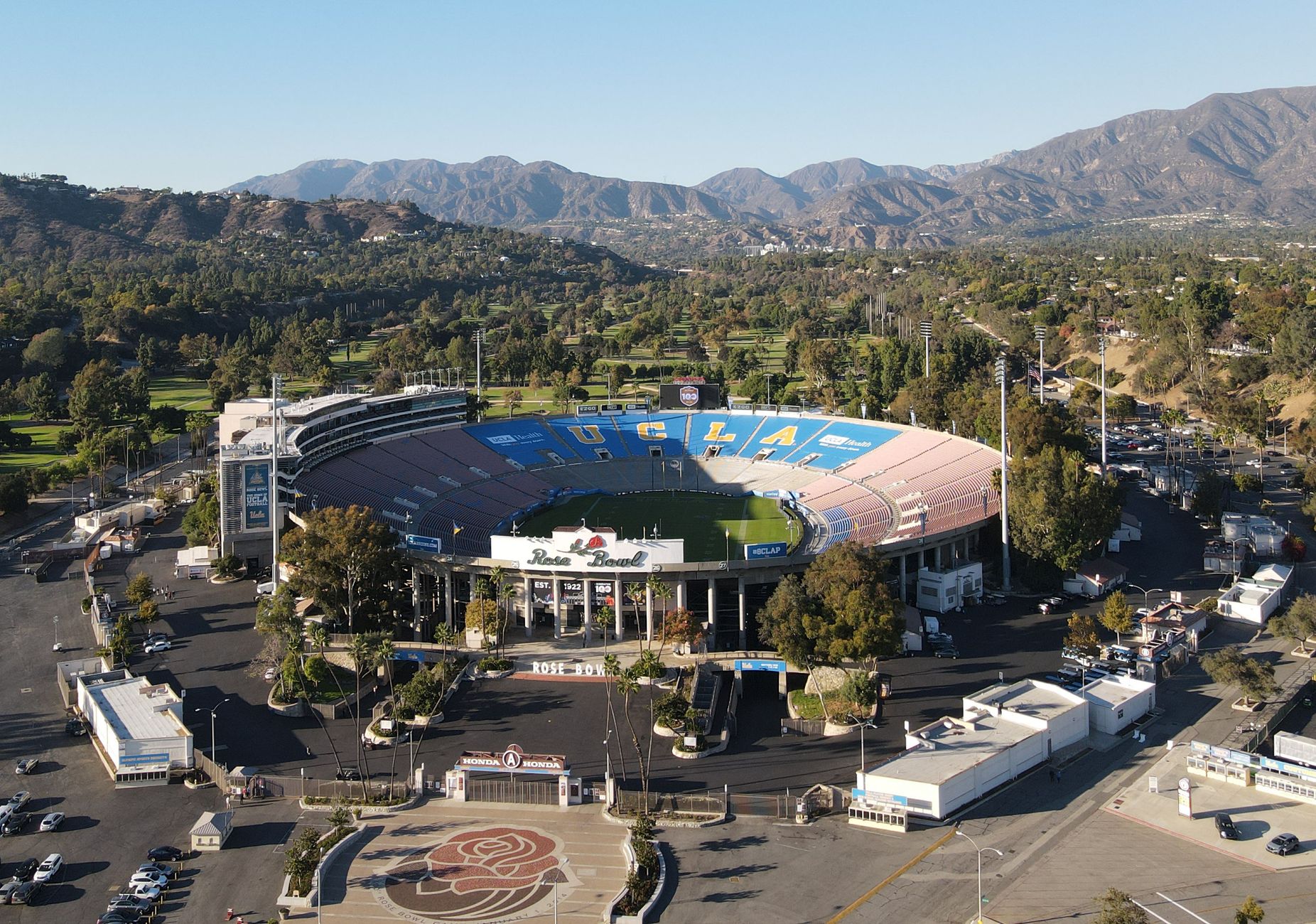
Photo by Fred Thomas III on Pexels
Which contenders have the strongest probability?
Harry Kane currently owns the clearest statistical case. The reported 56 goals and eight assists across Bayern Munich, the UEFA Champions League and England give him the kind of production voters cannot casually ignore. His additional goals in domestic and international competitions strengthen the volume argument, while Bayern's trophy prospects determine whether those numbers become a winning campaign.
Kylian Mbappé offers the strongest alternative profile. He combines elite scoring with global recognition and a realistic path to both club and World Cup glory. Erling Haaland has the same statistical danger but faces a tougher narrative problem if Manchester City does not dominate the biggest competitions. Lamine Yamal brings a different asset: age, creativity and the possibility of becoming the defining player of Spain's tournament.
Michael Olise is the high-upside outsider. His probability rises sharply if Bayern Munich win the Champions League and France reach the World Cup final. Dembélé, Rodri and Messi remain credible names, but each needs a specific catalyst: another dominant club campaign, a major international run or an extraordinary late-season surge.
| Candidate | Main advantage | Main risk |
|---|---|---|
| Harry Kane | Record-level scoring | Needs major trophies |
| Kylian Mbappé | Goals plus global profile | Must dominate decisive matches |
| Lamine Yamal | Creativity and World Cup upside | Lower accumulated volume |
| Erling Haaland | Elite scoring efficiency | Narrative and international risk |
| Michael Olise | High-impact creativity | Smaller margin for error |
| Ousmane Dembélé | Defending champion status | Repeat winners face a high bar |
Match Daily tracks these variables through player statistics, team tactics and tournament context. That is more useful than copying a ranking published before the knockout rounds.
Want a sharper tournament-based view?
The 2026 shift: what changed for players?
The competition changed because players now need two separate peaks: a sustained club season and a short international climax. That is brutally demanding. A forward can score 45 league goals and still lose the award if another candidate produces three decisive World Cup knockout performances. Conversely, a tournament hero cannot fully erase a mediocre eight-month club campaign unless the international achievement is historic.
The biggest operational variable is role. Kane's case depends on finishing, chance creation and leadership for Bayern Munich and England. Yamal's case depends more on chance creation, ball progression and match control. Rodri's older winning profile shows why midfield influence can prevail when a player controls the rhythm of elite matches, even without striker-level totals.
A second information-gain point is schedule compression. The 2026 World Cup begins during a period when many players have already accumulated heavy club workloads. Minutes, recovery and injury status therefore become indirect Ballon d'Or variables. A candidate who plays 900 high-intensity minutes in the tournament may gain visibility but lose efficiency, while a managed workload can preserve decisive quality.
“Individual and decisive performances” is one of the three central criteria reported in coverage of the award process. That phrase matters. A player should not be judged only by total goals; analysts should record goal state, opponent strength, knockout round and whether the contribution changed the result.
[Internal Link: 2026 World Cup player statistics]
What does this mean now?
It means current Ballon d'Or predictions 2026 should be expressed as tiers, not fake precision. Giving Kane a 62% chance today would be mathematically theatrical unless the model includes tournament draws, injuries, club trophies and national-team performance. A more honest forecast ranks candidates by conditional paths: Kane leads if Bayern win major silverware and England perform strongly; Mbappé leads if France reach the final; Yamal leads if Spain win and he becomes their creative engine.
The best forecast also separates “most likely winner” from “best value outsider.” Kane may have the highest baseline probability, while Yamal or Olise may have the greater upside relative to public expectations. This distinction matters for Match Daily readers who follow predictions rather than merely consume winner lists.
Use this evidence checklist before updating a forecast:
- Count goals, assists and minutes across all major competitions.
- Record decisive contributions in Champions League knockout matches.
- Measure World Cup impact by round, opponent and match state.
- Confirm team trophies rather than assuming star quality creates them.
- Penalize injuries, suspensions and inconsistent availability.
- Compare the player's role with the official award criteria.
A contrarian conclusion follows: Kane's numbers alone do not make him inevitable. If Bayern Munich exit the Champions League early and England underperform at the FIFA World Cup, his probability drops rapidly. Football's award math is nonlinear. One trophy can add more than ten routine goals.

Photo by https://kaboompics.com/ on Pexels
See the details behind each contender before making a forecast.
Three predictions for next quarter
The next quarter should be judged through three measurable developments rather than recycled speculation. First, Bayern Munich's Champions League progress will determine whether Kane's outstanding scoring record becomes an award-winning résumé. Second, France, England and Spain will reveal whether Mbappé, Kane or Yamal can translate club dominance into international authority. Third, the final nominee list and voting context will expose whether defending champion Dembélé can remain in the first tier.
Prediction 1: Kane remains the leading forecast
Kane is the most defensible number-one prediction because his reported 56 goals and eight assists create a substantial statistical base. His expected-value edge is strongest if Bayern Munich win the Bundesliga or Champions League and England reach at least the World Cup quarter-finals. His risk is not production; it is trophy conversion.
Prediction 2: Mbappé becomes the most dangerous challenger
Mbappé's path is simpler: elite scoring, a major club trophy and a deep France run. His global profile reduces the explanation cost for voters, while a decisive semi-final or final could overwhelm Kane's regular-season advantage. If France win the World Cup, Mbappé likely becomes the favorite regardless of earlier rankings.
Prediction 3: Yamal is the highest-upside disruptor
Yamal has the greatest ability to break the expected order. Spain winning the World Cup while Yamal leads chance creation would produce a historically powerful narrative. His downside is statistical accumulation; young creators often influence matches without collecting striker-level totals. That is why his forecast has a wide range rather than a weak one.
The rational conclusion is simple: Kane leads today, Mbappé owns the clearest takeover route, and Yamal offers the most explosive upside. Haaland, Olise and Dembélé remain live contenders. Anyone declaring certainty before the World Cup knockout rounds is not forecasting; they are performing confidence for the internet.
[Internal Link: World Cup knockout-stage prediction guide]
Match Daily will be most useful when it updates the model after verified performances, not when it pretends early rankings are permanent.
Frequently Asked Questions
Q: What are the Ballon d'Or predictions for 2026?
A: Harry Kane is the leading early Ballon d'Or predictions 2026 pick, with Kylian Mbappé and Lamine Yamal the strongest challengers. Kane's reported 56 goals and eight assists give him the best statistical foundation. However, the 2026 FIFA World Cup can change the ranking quickly because knockout-stage performances carry exceptional narrative and voting weight.
Q: When will the 2026 Ballon d'Or winner be announced?
A: The 2026 Ballon d'Or ceremony is expected to take place on October 26, 2026. The men's nominee list reportedly contains 30 players, with voting conducted by 100 international journalists. Always verify the final date through the official Ballon d'Or website because ceremony schedules can change.
Q: How does Ballon d'Or voting work in 2026?
A: One hundred journalists rank eligible players from first to tenth using individual performance, team achievements, sporting conduct and fair play. First-place rankings receive more points than lower positions, so a player's number of votes and ranking position both matter. The evaluation period covers performances from August 2025 through July 2026.
Q: What is the difference between Kane and Mbappé in the 2026 predictions?
A: Kane currently has the stronger statistical case, while Mbappé has the cleaner global and international takeover route. Kane benefits from his reported Bayern Munich output and England opportunity. Mbappé could overtake him with a Champions League triumph and a deep or winning FIFA World Cup campaign for France.
Q: Can a World Cup performance decide the 2026 Ballon d'Or?
A: Yes, a World Cup performance can decide the 2026 Ballon d'Or when it combines decisive knockout contributions with a strong club season. A semi-final or final-winning goal generally has greater award value than routine group-stage production. The effect is strongest when the player also leads a tournament-winning nation.
Q: Is Lamine Yamal a realistic 2026 Ballon d'Or prediction?
A: Lamine Yamal is a realistic high-upside prediction if Spain win the FIFA World Cup and he becomes their primary creative force. His case would rely on chance creation, progression, assists and decisive moments rather than striker-level goal totals. A deep tournament run without a major individual role would probably leave him behind Kane or Mbappé.
Q: How should I track Ballon d'Or predictions before October 2026?
A: Track verified goals, assists, minutes, Champions League rounds, domestic trophies and World Cup knockout contributions. Update the forecast after major matches instead of reacting to every headline. Match Daily provides tournament-focused analysis, team tactics and player statistics, but readers should also confirm official information through the Ballon d'Or and FIFA websites.
The final recommendation is straightforward: use Kane as the current baseline, Mbappé as the principal challenger and Yamal as the volatility pick, then reassess after every Champions League knockout and World Cup round.
Ready to follow the 2026 race with evidence rather than noise?